The team behind the business
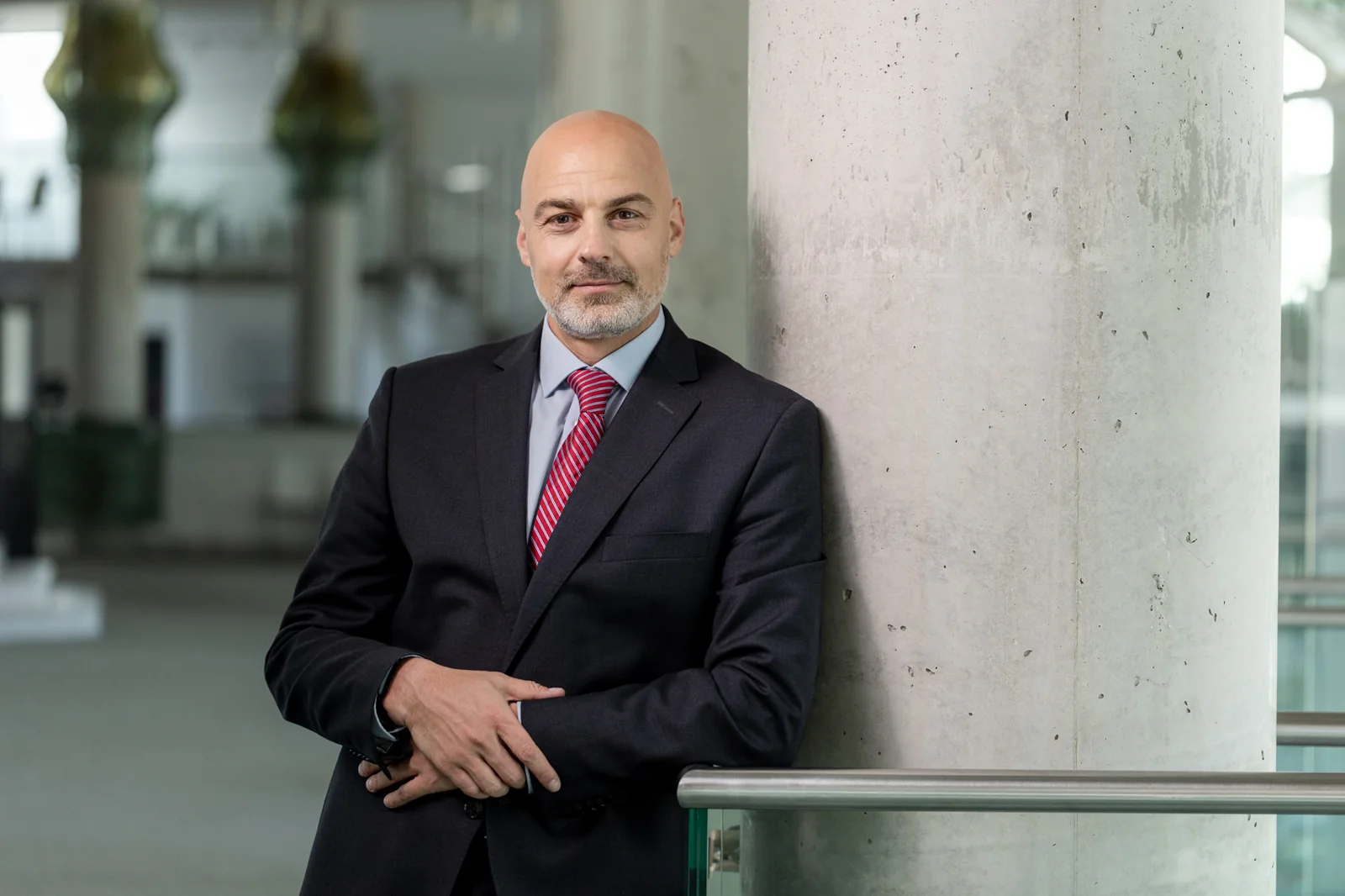
Published for Brand Distribution Group’s 30th anniversary, this 2023 interview records Armen Papazjan’s views at the time on leadership, team-building and the company’s direction.
The original 2023 article introduced Armen Papazjan as CEO of Brand Distribution Group and linked his approach to leadership with his experience in water polo. It described him as a former national representative and medal winner, and as a water polo referee at the time of publication.
The interview connected sport and business through team-building, preparation, motivation, commitment and shared responsibility.
This is an edited, third-person account of an interview published in June 2023, not a verbatim transcript.
What sport teaches about leadership
Papazjan said in the 2023 interview that sport and business shared several foundations: building a team, setting a strategy, planning, motivating people and sustaining commitment. He placed the team first, arguing that individual capability was not enough in a complex and competitive business environment.
He said that a team could combine individual skills and experience and, in BDG’s case, make better use of the company’s designed processes, create customer-focused approaches and pursue planned results. He described the organisation at that time as a 200-strong team and said its strength depended on the people within it.
Building an effective team
Papazjan said that leadership was central, as it is in sport. In his view, a leader had to earn trust and help people believe in the purpose of the organisation.
He identified respect, a sense of security and the confidence that an employee could rely on a manager as essential conditions. He said that people needed to feel noticed and valued before an organisation could work effectively.
Leading by example
He described himself as demanding, beginning with high expectations of himself. He said that leaders set both positive and negative examples and that he did not see another credible way to motivate a team.
He also said that he listened to colleagues, supported and trusted them, and tried to advise or help when needed. He valued colleagues bringing forward ideas, solutions and feedback for the development of the business, and described an open-door approach to his office.
BDG at its 30th anniversary
Papazjan said that the company was in a strong position but was aiming higher. He described the 30th anniversary as a turning point and said that the previous year’s results had been record-breaking financially and in scale.
He reported that more than 150 million products had been dispatched from the company’s warehouses in the prior year. He also stated that the business served FMCG customers around the world, was present in 100 markets on six continents, and was investing in new trade destinations.
He said the offer then included established and niche brands and was being expanded based on the organisation’s knowledge of market and customer needs. He described a package around distribution that included marketing, pre-sales preparation of goods to market requirements, customs clearance, transport, logistics and after-sales support.
Changing the business
Papazjan said that when he joined BDG in 2021, the business had not been meeting its goals. He described a restructuring process that added new people to existing teams, reduced workload and brought further experience and ideas into the organisation.
He said the company examined market segmentation to get closer to customers and worked to use its sales potential more fully. According to the 2023 interview, the prior year closed 40% above the planned target. He said the business was maintaining momentum while continuing to improve processes and its ability to respond to changes in the global economy, consumer needs and consumption patterns.
Putting change into practice
He said the changes reached every level of the organisation, including its management structure, and were introduced systematically. The company reviewed processes against plans, optimised operations and adjusted its organisational set-up.
He also described work on organisational culture, internal communication, team-building and a new remuneration system. In the interview, he said that progress depended on belief in success, determination and the ambition of the people involved.
Leading through change
Papazjan said he felt considerable responsibility. He said that his experience in FMCG, knowledge and skills gave him confidence in decisions, while the risks remained clear.
He also said that he found difficult challenges energising. The central point, he added, was that people were a company’s greatest asset: good working conditions and development opportunities mattered, particularly amid social and generational change.
The next stage of development
He said that the company was watching consumer change, expanding its offer and opening new markets. The interview referred to a department created that year for the alcohol market, which was examining changing consumption patterns and working with producers and suppliers from different regions.
He also said that warehouse space had been expanded in central Poland to support order assembly. The article reported an additional office in the United States alongside offices in European and Asian countries, and described work to adapt offers and services to local needs.
Priorities for the anniversary year
Papazjan said that the strategy sought to diversify sales channels and strengthen activity in the United Kingdom, Spain, Italy, China and India, while assessing opportunities in African markets. He also described efforts to expand work with retail chains in Poland and elsewhere, supported by a procurement team intended to tailor an offer to retailers’ needs.
The interview referred to the concept of modern hard-discount stores under the Vollmart brand, presented as a response to cost-of-living pressures and consumer expectations of quality and price. It also referred to e-commerce development, major marketplaces and the company’s own online channels, giving Vollmart24.pl as an example.
A message to prospective partners
Papazjan said that BDG’s value rested on its people and relationships. He described a then 200-person team with experience across departments, 16 languages and presence in important markets.
He said partners should feel part of the same team, and that he saw a team as extending beyond the organisation’s internal structure.
He said the business sought to build trade relationships, provide complementary support and help partners focus on their own companies. He also named passion, commitment, reciprocity, knowledge and trust as the values he believed shaped the organisation.